
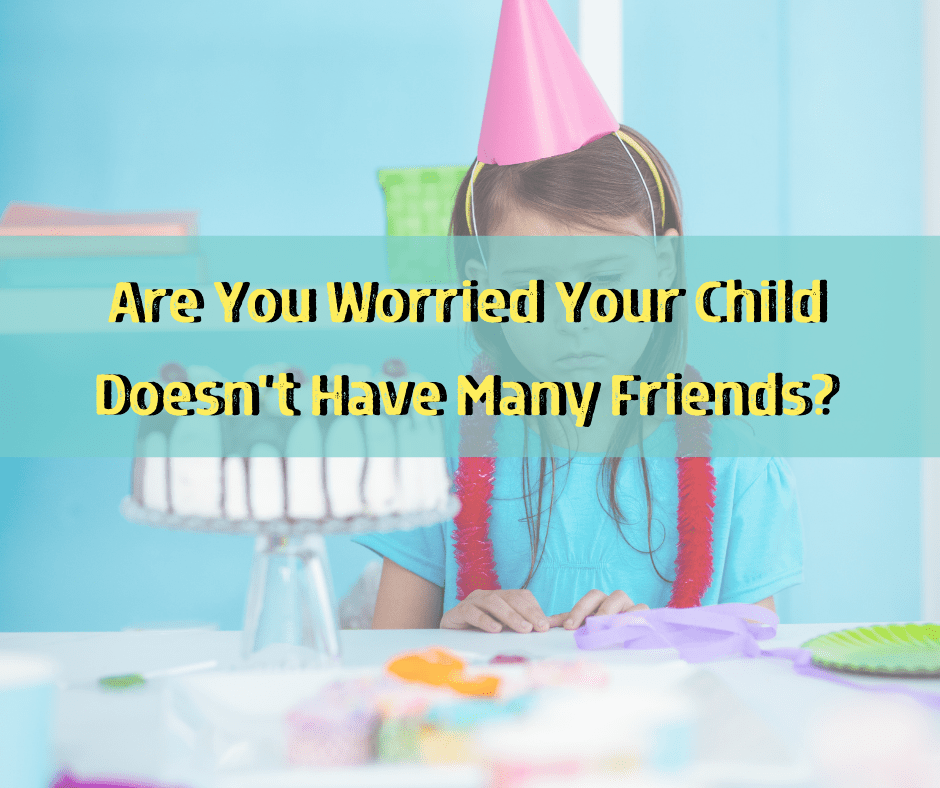
This is another recent article I did for the character-building and learning series, ThinkJr. If you’re concerned that your child doesn’t have many friends, don’t get too anxious. Look at the big picture first.
As a parent, it’s only natural that you want your children to be happy and have the very best. One of the things you most likely wish for your child is that she has many friends and is well-liked. If your child doesn’t have many friends, it can make you worried or anxious that something is wrong. Or, you might fear your child is not accepted or liked among her peers. However, before you assume the worst, take a moment to look at the big picture.
Think about your child’s personality. Is she outgoing or shy? Is she very active or more quiet and reserved? What types of things does she like to do? All of these different factors will influence how your child interacts with others and how she develops relationships.
The next big question to ask yourself is, does your child not have many friends, or does she not have any friends? There’s a BIG difference between those two answers.
If your kid has a few friends, just not many, the odds are good that everything is fine. For example, if your child has a handful of very close friends, this can be much more beneficial than having many friends with whom she shares no real connections.
Very often, when it comes to friendship, it’s about quality over quantity. Your child doesn’t need to be the most popular girl in school, she just needs to be confident and happy. If your kid has a couple of close buddies that she enjoys being around, and she is otherwise happy, you don’t need to be concerned if she doesn’t have a lot of friends.
But, if your kid doesn’t have any friends at all, then you need to dig deeper.
Talk with your child’s teachers about how other kids interact with her at school. Ask how the other children treat your child. Is your child staying off to the side, or is she trying to engage with others and being ignored? Make sure that there is no bullying involved, and if there is, address it immediately. The answers to these questions will provide you with helpful insight into how to address the situation.
Talk to your child too. Ask her if there is anyone at school whom she enjoys talking to or playing with. If your child says she doesn’t speak with anyone, ask her why. Ask your child if she would like to have a friend or if she prefers to be alone. The answers to these questions are also beneficial.
Next, take the answers you get from your child and combine them with the teachers’ responses. It’s time to play detective and determine what is going on – why doesn’t your child have friends? Does she want friends, and isn’t sure how to make friends? Or, does your child want others to leave her be? There’s a big difference in these two reasons, and you need to know which one applies to your kid before you can help her.
If your child is trying to make friends and not succeeding, help her develop the proper social skills and confidence to talk with others. Role-play with your child, use puppets or stuffed animals and play out scenes where your child introduces herself to other children. Encourage your child to be kind to others. Perhaps another kid in her class is timid and has trouble making friends; your kid and this shy child could help each other out in the friend department. If your child has someone at school that she sometimes talks to, arrange to have a play date so the two children can get to know each other better away from the crowds of other kids.
If your child pulls back and purposely stays away from other children, she could be extremely shy. Help your child build up her confidence and encourage her to take baby steps. Keep an eye out for our upcoming article on how to help your child overcome shyness for more helpful tips! Remember, it isn’t about having a ton of friends; it’s about having high-quality friendships and developing healthy, positive attitudes.
If you need a helping hand with teaching your child about being a confident individual, check out our engaging videos on ThinkJr. There are several character-building stories, songs, and techniques that you can use to encourage your child to be her best self.
 thefithouse
One thought on “Are You Worried Your Child Doesn’t Have Many Friends?”